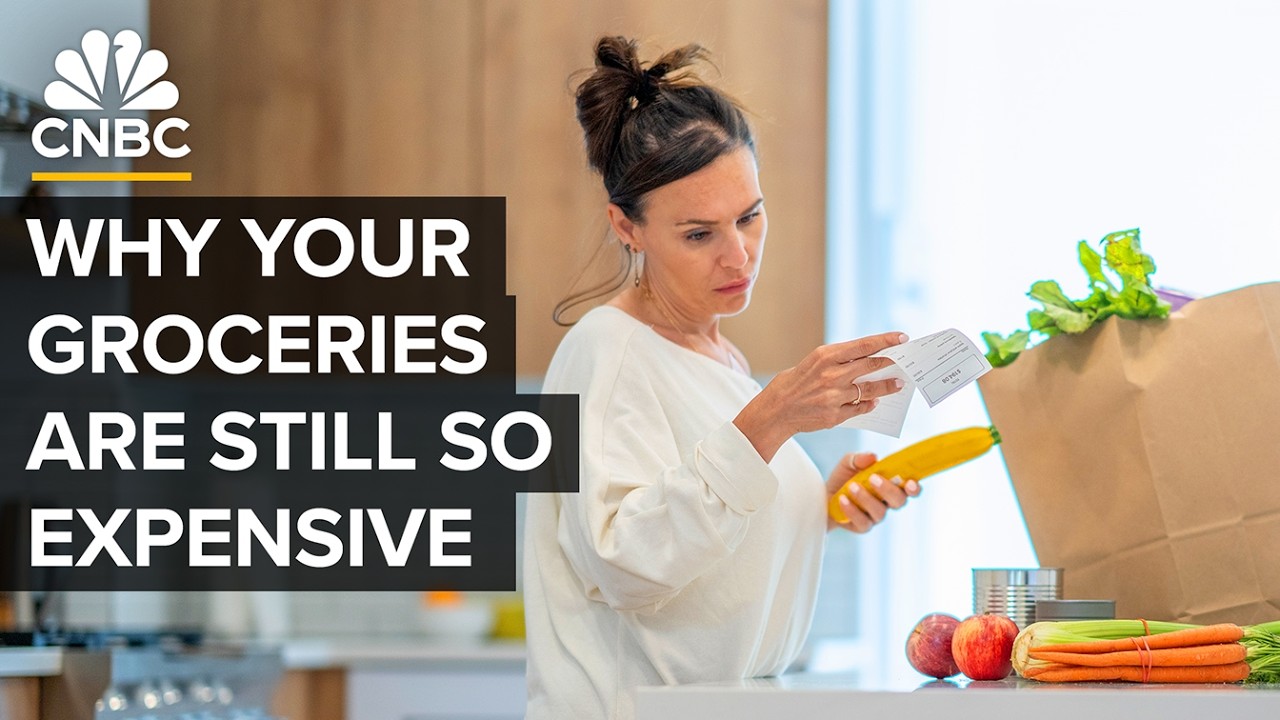
While some sectors see a decline in prices as inflation cools, the cost of food continues to rise sharply, posing a significant challenge for consumers across the United States. This blog explores the reasons behind these stubbornly high food prices and looks at potential solutions.
Video Overview
Explaining the Video
Despite a general decrease in inflation affecting prices such as gasoline, used cars, and energy, food prices have surged by 28% since 2019. A vast majority, 86% of consumers, express their frustration over escalating grocery costs, with more than a third cutting back on their purchases to manage expenses. Even as President-elect Trump mentions the difficulty of reducing grocery prices, the question remains: why are these costs continuing to rise, and is there a way to control them?
Key Discussions from the Video
1:56 Cost pass-through
4:25 Price gouging
6:46 Consumer impact
9:04 Solutions
Produced by Juhohn Lee and edited by Erin Black, with animations by Christina Locopo and Jason Reginato. Jeniece Pettitt oversaw the production, with additional contributions from Charlotte Morabito. Footage provided by Getty Images.
Subscribe to CNBC for more updates and expert insights into economic trends and personal finance strategies. Take advantage of CNBC’s new course on negotiating higher salaries, led by industry experts to help you secure a better financial future.